

What Happens If You Ignore a Small Cavity? The Stages of Tooth Decay
Introduction
Have you ever noticed a tiny dark spot on your tooth and thought, “It is probably nothing”? You may not feel pain, so it can be tempting to ignore it. However, what happens if you ignore a small cavity can be more serious than you expect.
A cavity does not usually disappear on its own. In many cases, tooth decay slowly progresses from the outer tooth surface into deeper layers. Therefore, a problem that may initially need a simple dental filling can eventually require more extensive treatment.
The good news is that early tooth decay can often be managed effectively when detected and treated by a dentist. Regular dental checkups also help identify cavities before they cause significant discomfort.
So, how does a small cavity become a bigger dental problem? Let us understand the stages of tooth decay, the warning signs, treatment options, and why early professional care matters.
What Is a Dental Cavity?
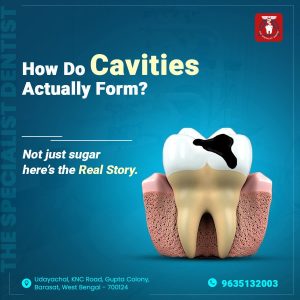
A dental cavity is a damaged area that develops on a tooth because of tooth decay. It occurs when bacteria in the mouth interact with sugars and starches from food.
As a result, acids are produced. These acids can gradually weaken the hard outer layer of the tooth, known as enamel.
At first, the damage may be very small. You might not notice any pain or visible hole. However, without appropriate dental care, the decay can continue to move deeper into the tooth.
Therefore, even a small cavity deserves attention.
What Happens If You Ignore a Small Cavity?
The answer depends on how advanced the decay is. However, a cavity that is left untreated generally has the potential to become progressively deeper.
A small cavity may initially affect only the enamel. At this stage, there may be little or no discomfort. Consequently, many people delay their dental appointment.
As the decay progresses, it can reach the softer layer underneath the enamel. This area is called dentin. Once decay reaches dentin, sensitivity and discomfort may become more noticeable.
Furthermore, if the cavity continues to progress, it can eventually reach the dental pulp. The pulp contains nerves and blood vessels. When this happens, patients may experience significant toothache, sensitivity, or pain.
In advanced cases, the tooth may require root canal treatment, a dental crown, or other restorative treatment. If the tooth becomes severely damaged and cannot be restored, extraction may sometimes be necessary.
Therefore, treating a cavity early can help prevent a small dental problem from becoming a complicated one.
The Stages of Tooth Decay
Understanding the stages of tooth decay can help you recognise why early treatment is so important.
Stage 1: Enamel Demineralisation
The earliest stage of tooth decay begins when acids gradually remove minerals from the enamel.
You may notice a white or chalky area on the tooth. However, there may be no pain at this point.
This stage can sometimes be managed with professional preventive care, depending on the extent of damage. Therefore, identifying early changes during a dental examination is valuable.
Stage 2: Enamel Breakdown
If the decay continues, the enamel can start breaking down.
A small cavity may form. At this point, the tooth may still feel completely normal. Nevertheless, the damage is no longer simply an early mineral change.
A dentist can assess the affected area and recommend the appropriate treatment. In many cases, treating the cavity at this stage can prevent further progression.
Stage 3: Decay Reaches the Dentin
Underneath the enamel is dentin. It is softer and more sensitive than enamel.
Once decay reaches the dentin, you may experience sensitivity when consuming hot, cold, sweet, or acidic foods and drinks.
However, some people still experience no symptoms. This is why relying only on pain to decide whether you need dental care can be misleading.
Stage 4: Decay Reaches the Dental Pulp
The pulp is the innermost part of the tooth. It contains nerves and blood vessels.
When decay reaches the pulp, inflammation or infection can develop. Consequently, symptoms may become much more noticeable.
You may experience:
- Persistent toothache
- Increased sensitivity
- Pain while biting or chewing
- Pain that occurs without an obvious trigger
- Difficulty sleeping because of tooth pain
At this stage, a simple filling may no longer be sufficient. Depending on the condition of the tooth, root canal treatment may be recommended to remove infected or inflamed tissue and preserve the tooth.
Stage 5: Dental Infection or Abscess
If an infected tooth remains untreated, infection can spread beyond the pulp.
An abscess may develop around the tooth. This can cause swelling, tenderness, pus formation, and significant pain.
In addition, an advanced dental infection can affect surrounding tissues. Therefore, this stage requires prompt professional dental assessment.
Treatment may involve root canal treatment or extraction, depending on whether the tooth can be safely restored.
Common Symptoms of Tooth Decay
A cavity does not always cause symptoms in its early stages. However, as decay progresses, you may notice changes such as:
- White, brown, or dark spots on the tooth
- Tooth sensitivity
- Pain when eating or drinking
- Sensitivity to hot or cold foods
- Pain while chewing
- Food getting stuck in a particular area
- A visible hole or pit in the tooth
- Persistent toothache
- Swelling around the affected tooth
Moreover, symptoms can vary from person to person.
Therefore, the absence of pain does not necessarily mean that your teeth are healthy. A dental examination can identify problems that may not yet be causing symptoms.
What Causes Dental Cavities?
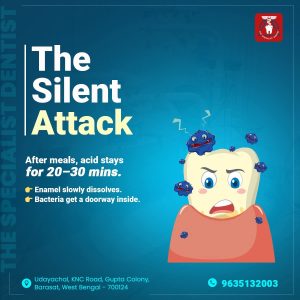
Cavities develop through a combination of bacteria, food particles, acids, and time.
1. Plaque Build-Up
Plaque is a sticky layer that forms on teeth. It contains bacteria and can build up when oral hygiene is inadequate.
2. Frequent Sugar and Starch Exposure
Bacteria can use sugars and carbohydrates from food to produce acids. Frequent exposure to these acids can increase the risk of enamel damage.
3. Poor Oral Hygiene
Inadequate brushing and cleaning between teeth can allow plaque to remain on tooth surfaces.
4. Dry Mouth
Saliva helps protect teeth and neutralise acids. Therefore, reduced saliva flow can increase the risk of tooth decay.
5. Deep Grooves and Tooth Anatomy
Some teeth have deep pits and grooves where food and plaque can accumulate more easily. As a result, these areas may be more vulnerable to cavities.
Risk Factors for Tooth Decay
Certain factors can increase your likelihood of developing cavities.
These include:
- Frequent consumption of sugary foods or drinks
- Poor oral hygiene
- Infrequent dental checkups
- Dry mouth
- Existing cavities
- Deep tooth grooves
- Certain medications that reduce saliva
- Difficulty cleaning between teeth
- Previous dental restorations that require monitoring
However, having one or more risk factors does not mean you will definitely develop tooth decay.
Regular professional dental care can help identify your individual risks and maintain your oral health.
Why Early Diagnosis Matters
Early diagnosis is one of the most important parts of cavity management.
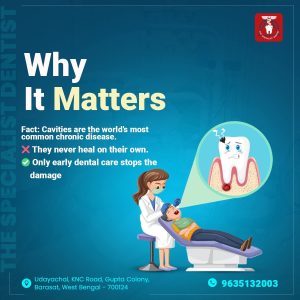
A small cavity may require relatively straightforward restorative treatment. However, deeper decay can affect more of the tooth and may require more complex procedures.
For example, when decay reaches the pulp, root canal treatment may be necessary to save the tooth.
Similarly, extensive structural damage may require a dental crown after appropriate treatment.
Therefore, early diagnosis can help:
- Prevent decay from progressing
- Preserve more natural tooth structure
- Reduce the risk of severe toothache
- Lower the risk of dental infection
- Avoid more extensive treatment
- Protect your ability to chew comfortably
- Support better long-term oral health
In addition, routine dental examinations can identify cavities before they become painful.
Treatment Options for Tooth Decay
Treatment depends on the stage and severity of the decay.
Professional Preventive Care
If tooth decay is detected at a very early stage, your dentist may recommend preventive or remineralisation-focused care based on your specific condition.
However, once a physical cavity has developed, restorative treatment may be required.
Dental Fillings
A dental filling is commonly used to restore a tooth affected by a cavity.
The dentist removes the damaged portion and restores the tooth using an appropriate filling material.
Therefore, early cavity treatment can help preserve the remaining healthy tooth structure.
Root Canal Treatment
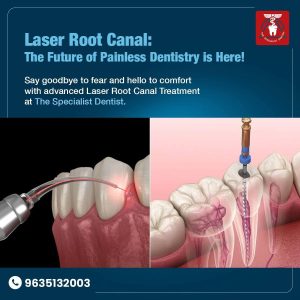
If decay reaches the pulp and causes significant inflammation or infection, root canal treatment may be recommended.
During this procedure, the affected pulp is removed, the inside of the tooth is cleaned and sealed, and the tooth is restored appropriately.
Depending on the amount of remaining tooth structure, a crown may also be recommended.
Dental Crown
A dental crown covers and protects a damaged or weakened tooth.
Crowns may be recommended when a tooth has lost significant structure due to decay or after root canal treatment.
Tooth Extraction
When a tooth is severely damaged and cannot be predictably restored, extraction may be considered.
However, dentists generally aim to preserve natural teeth whenever possible.
If extraction is necessary, your dentist can discuss suitable tooth replacement options.
Benefits of Professional Dental Treatment
Professional dental treatment does more than address the visible cavity.
It also helps protect the overall health and function of your mouth.
Key benefits include:
- Stops or controls active decay
- Preserves natural tooth structure
- Reduces the risk of infection
- Helps prevent severe dental pain
- Restores chewing function
- Improves long-term oral health
- Reduces the likelihood of more complex treatment
Furthermore, professional treatment allows your dentist to check for other oral health concerns that may not be obvious to you.
Possible Complications If a Cavity Is Ignored
Ignoring a small cavity can allow the decay to progress.
Consequently, several complications may develop.
Severe Toothache
As decay moves deeper, it can irritate the nerves inside the tooth. This may cause persistent or intense pain.
Increased Sensitivity
A decayed tooth may become sensitive to hot, cold, sweet, or acidic foods and drinks.
Tooth Fracture
As decay weakens the tooth, its structure may become more vulnerable to breaking.
Pulp Infection
Deep decay can reach the pulp and cause inflammation or infection.
Dental Abscess
An untreated infection can sometimes result in an abscess around the tooth.
Tooth Loss
If the tooth becomes too damaged to restore, extraction may become necessary.
More Complex Treatment
Most importantly, a cavity that could have been treated earlier may eventually require more extensive treatment.
Therefore, postponing dental care is rarely a good long-term strategy.
Prevention Tips for Dental Cavities
Although cavities cannot always be completely prevented, good oral care can significantly reduce your risk.
Maintain Regular Oral Hygiene
Brush your teeth regularly using fluoride toothpaste and clean between your teeth as recommended by your dentist.
Limit Frequent Sugary Snacks and Drinks
Frequent sugar exposure can increase acid attacks on your teeth. Therefore, being mindful of your dietary habits can support better oral health.
Attend Regular Dental Checkups
Routine dental examinations help identify cavities and other problems at an earlier stage.
Follow Professional Dental Advice
Your dentist may recommend preventive treatments or personalised oral care based on your teeth and risk factors.
Do Not Ignore Dental Changes
A small dark spot, sensitivity, food trapping, or change in a tooth should not automatically be dismissed.
Instead, have it professionally evaluated.
When Should You Visit a Dentist?
You should schedule a dental appointment if you notice:
- A visible hole in your tooth
- A new dark or white spot
- Persistent sensitivity
- Toothache
- Pain while chewing
- Swelling around the tooth
- Food repeatedly getting stuck in one area
- A broken or chipped tooth
- A previous filling that feels damaged or loose
However, you do not have to wait until you experience symptoms.
Regular dental checkups are important even when your teeth feel completely normal.
Myths vs Facts About Cavities
Myth: A cavity always causes pain.
Fact: Early cavities may cause no pain at all. This is why regular dental examinations are important.
Myth: If the pain disappears, the cavity is cured.
Fact: Symptoms can change even when the underlying dental problem remains. Professional assessment is still necessary.
Myth: Small cavities are not serious.
Fact: A small cavity can become deeper if it is not treated appropriately.
Myth: Only children get cavities.
Fact: People of all ages can develop tooth decay.
Myth: A cavity can heal completely on its own.
Fact: Very early enamel changes may sometimes be managed through professional preventive care. However, an established cavity generally requires professional dental treatment.

Long-Term Oral Health Importance
Your natural teeth are designed to function together. Each tooth contributes to chewing, speaking, and maintaining the overall balance of your bite.
Therefore, protecting natural teeth is an important part of long-term oral health.
A small cavity may seem unimportant today. Nevertheless, untreated decay can gradually compromise the tooth.
Moreover, one dental problem can sometimes affect surrounding teeth and tissues. For example, a severely damaged tooth may alter how you chew or cause you to favour one side of your mouth.
Consequently, early dental care is not simply about treating pain. It is about preserving your teeth and maintaining healthy oral function over time.
Conclusion
So, what happens if you ignore a small cavity? In many cases, the decay can gradually become deeper and more difficult to treat.
A cavity may begin as a small area of enamel damage. However, if it progresses, it can reach the dentin, affect the dental pulp, cause infection, and potentially lead to tooth loss.
Fortunately, early professional care can make a significant difference. Regular dental checkups allow your dentist to identify cavities and other oral health problems before they become more serious.
Therefore, do not wait for severe pain before seeking dental care. If you have noticed a dark spot, sensitivity, food trapping, or any unusual change in your tooth, schedule a professional dental examination.
Your teeth may not hurt today, but that does not mean there is no problem. Early detection can help protect your natural teeth for years to come.
Book Your Dental Appointment
Have you noticed a cavity, sensitivity, or a dark spot on your tooth?
Do not ignore it. Visit your dentist for a professional examination and personalised treatment plan.
Schedule your regular dental checkup and take the first step towards healthier, stronger teeth.
Book your appointment today and get professional dental care before a small cavity becomes a bigger problem.
[Dental Clinic Barasat, Dental Clinic near me, Dentist near me, Dental Clinic Barasat, Dental Clinic near me, Dentist near me, Dental Clinic Barasat, Dental Clinic near me, Dentist near me, Dental Clinic Barasat, Dental Clinic near me, Dentist near me, Dental Clinic Barasat, Dental Clinic near me, Dentist near me, Dental Clinic Barasat, Dental Clinic near me, Dentist near me, Dental Clinic Barasat, Dental Clinic near me, Dentist near me, Dental Clinic Barasat, Dental Clinic near me, Dentist near me, Dental Clinic Barasat, Dental Clinic near me, Dentist near me, Dental Clinic Barasat, Dental Clinic near me, Dentist near me, Dental Clinic Barasat, Dental Clinic near me, Dentist near me, Dental Clinic Barasat, Dental Clinic near me, Dentist near me, Dental Clinic Barasat, Dental Clinic near me, Dentist near me]