

Tooth decay doesn’t always start with a hole you can see or pain you can feel. In fact, some of the most damaging cavities form silently between your teeth — and by the time you notice them, the damage may already be deep.
At The Specialist Dentist, Barasat, we often see patients who are surprised when X-rays reveal “interproximal cavities”, meaning decay between two teeth. These types of cavities can go unnoticed for months, even years, because they develop in areas that your toothbrush can’t easily reach.
Let’s understand how these hidden cavities form, why they’re hard to detect early, and what you can do to prevent them.
What Are Cavities in Between Teeth?
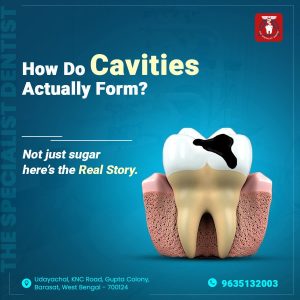
Cavities in between teeth (also called interproximal caries) are tiny decay spots that develop on the sides of your teeth, right where two teeth touch.
This area easily traps:
- Food particles
- Sugar and starch residues
- Plaque bacteria
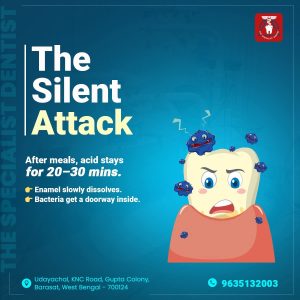
Since these spots are difficult to clean, bacteria stay longer and produce acids that slowly erode your enamel — the hard outer layer of your teeth.
🪥 2. Why You Don’t Feel Them at First
Many patients wonder, “If I have a cavity, shouldn’t it hurt?”
Not always. Here’s why:
🧩 Slow and Silent Progression
In the early stages, cavities only affect the enamel, which has no nerves. So, even as decay spreads, you won’t feel any pain or sensitivity.
🔍 Hidden Location
Because these cavities form between teeth, they’re not visible in the mirror or even during routine brushing. Only dental X-rays can detect them early.
⚡ Pain Comes Later
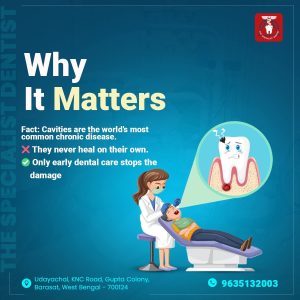
By the time you feel discomfort, the cavity has likely reached the inner dentin layer or even the pulp, where the tooth’s nerves and blood vessels are located. This is why you don’t feel anything—until it’s too late.
🦷 3. What Causes Cavities Between Teeth
Even with regular brushing, some areas are simply harder to clean. The most common causes include:
Common Triggers:
- Poor flossing habits: Food gets trapped between teeth and rots over time.
- Sticky or sugary foods: Candies, chocolates, soft drinks, and bread feed bacteria.
- Infrequent dental checkups: Small cavities go unnoticed without X-rays.
- Dry mouth: Less saliva means less protection from bacteria.
- Tight tooth spacing: Crowded teeth create hard-to-clean contact points.
These factors together allow bacteria to thrive — and decay begins silently.
🪞 4. Signs You Might Have a Hidden Cavity
Even though you can’t see them, there are early warning signs your teeth may give.
Watch for:
- Mild tooth sensitivity (especially to sweets or cold drinks)
- Food getting stuck between the same teeth repeatedly
- Dark lines or shadows visible only on X-rays
- Occasional toothache while biting or chewing
If you notice any of these symptoms, schedule a checkup before the problem worsens.
🧬 5. How Dentists Detect Hidden Cavities
At The Specialist Dentist, we use a combination of clinical examination and dental X-rays to identify interproximal cavities early.
Our diagnostic process includes:
- Visual inspection: Checking gum lines and tooth surfaces
- Bitewing X-rays: Revealing hidden decay between teeth
- Digital imaging: Providing precise images for accurate treatment planning
This approach helps us detect even the tiniest cavities before they cause pain or deep infection.
🩺 6. Treatment Options for Cavities in Between Teeth
The good news is that most interproximal cavities are treatable, especially if detected early.
Depending on severity, treatments may include:
🦷 Dental Fillings
If caught early, the decayed portion is removed and replaced with a tooth-colored composite filling that restores strength and function.
🦷 Inlays or Onlays
For moderate decay, an inlay or onlay provides extra support and durability for the damaged area.
🦷 Root Canal Treatment
If the cavity reaches the pulp, a root canal becomes necessary to remove infection and save the tooth.
🦷 Dental Crowns
In advanced cases, where the tooth structure is heavily damaged, a crown protects the remaining tooth from further decay.
🪥 7. How to Prevent Cavities Between Teeth
While treatment is effective, prevention is always better. Here are simple yet powerful ways to keep cavities away:
✅ Daily Oral Care Tips
- Brush twice a day using a fluoride toothpaste.
- Floss at least once daily to remove plaque between teeth.
- Use an interdental brush or water flosser if you have tight spaces.
- Rinse with a fluoride mouthwash after brushing.
- Stay hydrated to maintain healthy saliva flow.
🧑⚕️ Regular Dental Visits
Visit your dentist every 6 months for a checkup and cleaning. This allows early detection of cavities that aren’t visible or painful yet.
At The Specialist Dentist, our preventive dental care plans include routine X-rays, professional scaling, and fluoride treatments to strengthen enamel and stop cavities from progressing.

Why Ignoring It Can Be Dangerous
If left untreated, interproximal cavities can lead to:
- Severe tooth pain
- Nerve infection requiring root canal
- Gum inflammation
- Tooth fracture or loss
- Spread of infection to nearby teeth
Even though these cavities start small, their effects can quickly become serious.
At The Specialist Dentist, Prevention Comes First
We believe that early diagnosis saves both your teeth and your time. Our clinic in Barasat provides:
- Digital X-ray diagnosis for early cavity detection
- Painless fillings and restorations
- Advanced root canal treatments
- Preventive dental care programs
Our friendly team ensures a comfortable experience while protecting your smile from hidden dental threats.
Take Action Before It Hurts!
Cavities between teeth may be invisible, but the damage they cause is very real. The key is catching them early through routine checkups and proper oral hygiene.
If you haven’t had a dental X-ray or cleaning in the last six months, now is the perfect time to schedule one.
Book your appointment today:
📍 The Specialist Dentist
Udayachal, KNC Road, Gupta Colony, Barasat – 700124
📞 9635132003
🌐 www.thespecialistdentist.in
Your smile deserves protection — let’s keep it healthy, bright, and cavity-free!