

Bleeding gums are common. Many people notice blood while brushing or flossing. However, most ignore it because the bleeding seems mild. But even mild bleeding is not normal. It often indicates an underlying gum problem.
Therefore, it is important to understand why gums bleed and what you can do to keep them healthy.
At The Specialist Dentist, Udayachal, KNC Road, Gupta Colony, Barasat, we see many patients with gum-related issues. Usually, early treatment helps prevent bigger dental problems. So, in this blog, we explain the causes and prevention methods in simple, clear language.
What Does It Mean When Your Gums Bleed?
Healthy gums do not bleed. If your gums bleed, it means the tissues are inflamed or irritated. This can happen because of plaque buildup, infections, or other dental conditions.
Moreover, regular bleeding while brushing should never be dismissed. It may be an early sign of gum disease.
Common Causes of Bleeding Gums
Bleeding gums have several possible causes. Understanding them helps you take the right action at the right time.
1. Gingivitis
Gingivitis is the earliest stage of gum disease. It happens when plaque accumulates along the gumline.
As plaque hardens into tartar, gums become swollen and tender. Because of this inflammation, they bleed easily during brushing.
Common signs of gingivitis:
-
Red, swollen gums
-
Bad breath
-
Mild bleeding during brushing or flossing
If treated early, gingivitis is reversible.
2. Poor Oral Hygiene
When brushing or flossing is irregular, plaque builds up quickly.
This sticky layer irritates the gums and makes them sensitive. As a result, bleeding becomes more frequent.
3. Brushing Too Hard
Using a hard-bristled toothbrush or brushing aggressively can damage gum tissues.
Although strong brushing may feel effective, it harms the gums and causes bleeding.
Therefore, dentists always recommend gentle brushing with a soft-bristled brush.
4. Vitamin Deficiencies
Lack of essential vitamins such as Vitamin C or Vitamin K may also contribute to gum bleeding.
Although this is less common, it still affects overall gum health.
5. Hormonal Changes
During pregnancy, puberty, and menstruation, hormonal changes may increase gum sensitivity.
Consequently, gums may bleed more easily. This condition is known as pregnancy gingivitis in expectant mothers.
6. Medical Conditions
Certain medical conditions can weaken gums and blood vessels.
These include:
-
Diabetes
-
Blood clotting disorders
-
Specific infections
Because gums are delicate, any systemic condition can affect them.
7. Smoking and Tobacco Use
Tobacco reduces blood flow to the gums. This weakens the tissues and slows healing.
Additionally, smokers often experience masked symptoms, which means gum disease may progress silently.
8. Ill-Fitting Dental Appliances
Dentures or braces that do not fit properly may rub against the gums.
This constant friction can cause irritation and bleeding.

Symptoms That Often Accompany Bleeding Gums
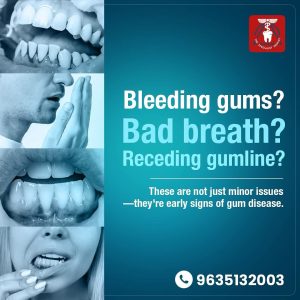
Bleeding gums rarely appear alone. You may notice other symptoms such as:
-
Swollen, puffy gums
-
Receding gumline
-
Persistent bad breath
-
Sensitivity while eating or drinking
-
Loose teeth (in advanced cases)
-
Pain while chewing
When several symptoms show up together, gum disease may be progressing.
Thus, timely dental checkups become essential.
Possible Risks of Ignoring Bleeding Gums
Although bleeding may look minor, ignoring it can lead to major oral health problems.
1. Periodontitis
If gingivitis is untreated, it can progress to periodontitis.
This advanced gum disease damages the bone supporting your teeth.
Eventually, teeth may loosen or fall out.
2. Gum Recession
Inflammation makes gums pull back from the teeth.
Over time, this exposes the roots and increases sensitivity.
3. Tooth Loss
Advanced gum infection can destroy bone and tissues.
Therefore, untreated bleeding gums can ultimately result in tooth loss.
4. Bad Breath
Chronic bleeding and infection release foul-smelling bacteria.
As a result, patients often experience persistent bad breath.
5. Impact on Overall Health
Several studies have linked gum disease to conditions like:
-
Heart disease
-
Diabetes complications
-
Respiratory infections
This shows that gum health is closely connected to general health.
Easy Prevention Tips for Healthy Gums
Although bleeding gums can be alarming, preventing them is simple. Moreover, small daily habits can make a big difference.
1. Keep Up With Regular Dental Checkups
Professional cleanings help remove plaque and tartar that brushing cannot remove.
Therefore, visiting your dentist every six months is crucial for gum health.
2. Use Gentle Brushing Techniques
Brush with light pressure in circular motions.
Additionally, choose a soft-bristled toothbrush to avoid gum damage.
3. Maintain Good Oral Hygiene
Healthy gums require consistent routine care.
Make sure you:
-
Brush twice daily
-
Clean along the gumline
-
Replace your toothbrush every 3 months
Good hygiene prevents plaque buildup and reduces inflammation.
4. Follow Your Dentist’s Advice
If you have braces, dentures, or ongoing dental treatment, follow your dentist’s instructions carefully.
Proper adjustments and checkups help prevent irritation and bleeding.
5. Avoid Tobacco Products
Tobacco damages gum tissues and weakens immunity.
Therefore, quitting or reducing tobacco use significantly improves gum health.

When Should You Visit a Dentist?
Although occasional bleeding may happen, constant bleeding is a sign of gum disease.
You should visit a dentist if you notice:
-
Bleeding for more than one week
-
Swollen or painful gums
-
Receding gumline
-
Persistent bad breath
-
Sensitivity while chewing
The earlier the diagnosis, the simpler the treatment.
Treatment Options for Bleeding Gums
At The Specialist Dentist, we offer several treatments depending on the severity of the condition.
1. Professional Dental Cleaning
Removes plaque and tartar to reduce gum inflammation.
2. Deep Cleaning (Scaling & Root Planing)
For moderate gum disease or chronic bleeding.
3. Periodontal Therapy
For advanced gum disease requiring specialized care.
4. Customized Treatment Plans
Every patient receives a plan based on their needs, lifestyle, and oral condition.
Why Choose The Specialist Dentist for Gum Care?
At The Specialist Dentist, Barasat, we focus on accurate diagnosis and gentle treatment.
Furthermore, our clinic ensures comfortable care with modern equipment.

What We Offer
-
Expert gum disease treatment
-
Painless cleaning procedures
-
Advanced periodontal care
-
Safe, hygienic environment
-
Patient-friendly guidance
Clinic Details
📍 Udayachal, KNC Road, Gupta Colony, Barasat – 700124
📞 9635132003
🌐 www.thespecialistdentist.in