

Braces vs Clear Aligners: Which Orthodontic Treatment Is Right for You?
Introduction
Are you unhappy with crooked, crowded, or uneven teeth but unsure which treatment to choose? Braces vs clear aligners is one of the most common questions patients ask when considering orthodontic treatment.
Both options can straighten teeth, improve your bite, and support better oral health. However, they work in different ways and may suit different dental needs, lifestyles, and preferences.
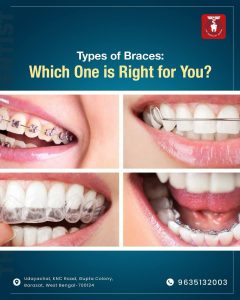
Traditional braces use brackets and wires that remain attached to the teeth throughout treatment. Clear aligners, on the other hand, use a series of removable, transparent trays that gradually move the teeth into better positions.
Therefore, choosing between braces and clear aligners should not be based only on appearance. Your tooth position, bite, treatment complexity, age, oral health, and ability to follow treatment instructions all matter.
This guide explains the key differences between braces vs clear aligners, including their benefits, limitations, treatment process, maintenance, and suitability. With the right professional assessment, you can make a more informed decision about your smile.

What Are Braces and Clear Aligners?
Braces and clear aligners are orthodontic treatments designed to gradually move teeth into healthier and more functional positions.
Although the goal is similar, the treatment methods are different.
Traditional braces use brackets fixed to the teeth and connected with orthodontic wires. These components apply controlled pressure to move the teeth gradually.
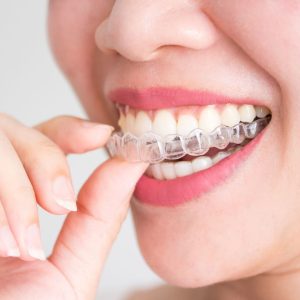
Clear aligners use a series of custom-made transparent trays. Each tray is designed to move the teeth slightly. Patients typically progress through a sequence of aligners according to their dentist’s treatment plan.
However, neither option is automatically better for every patient. The most suitable treatment depends on the individual’s dental condition and treatment goals.
Braces vs Clear Aligners: Key Differences
When comparing braces vs clear aligners, consider more than just appearance.
| Feature | Traditional Braces | Clear Aligners |
|---|---|---|
| Appearance | More visible | Mostly transparent |
| Removable | No | Yes |
| Eating restrictions | Some restrictions | Usually fewer restrictions |
| Cleaning | Requires careful cleaning around brackets | Easier to clean after removing aligners |
| Treatment control | Fixed system | Requires patient compliance |
| Complex cases | Can treat many complex problems | Suitable for many mild to moderate cases; some complex cases may also be treated |
| Dental visits | Regular adjustment visits | Regular monitoring visits |
| Lifestyle | May require more adjustment | Generally more convenient |
| Discipline required | Lower patient compliance needed | High compliance is important |
Therefore, the right choice depends on both clinical requirements and personal lifestyle.
What Are Traditional Braces?
Traditional braces are one of the most established orthodontic treatment options.
They consist of small brackets attached to the teeth. An orthodontic wire connects the brackets and is adjusted periodically to apply controlled pressure.
Over time, this pressure encourages the teeth to move into their planned positions.
Benefits of Braces
Traditional braces offer several advantages:
- They can treat a wide range of alignment problems.
- They remain attached to the teeth throughout treatment.
- They do not depend on the patient remembering to wear them.
- They can be useful for more complicated tooth movements.
- They have been used successfully for many years.
Furthermore, modern braces are available in different designs. Depending on the patient’s needs, an orthodontic professional may recommend conventional metal braces or other types.
Limitations of Braces
However, braces also have some limitations.
They are more noticeable than clear aligners. In addition, food can become trapped around brackets and wires, making oral hygiene more challenging.
Patients may also need to avoid certain hard or sticky foods to reduce the risk of damaging orthodontic components.

What Are Clear Aligners?
Clear aligners are transparent, removable orthodontic trays designed to gradually reposition teeth.
Instead of using fixed brackets and wires, aligners apply controlled pressure to specific teeth according to a digitally planned treatment sequence.
Patients generally wear each aligner for the recommended amount of time before moving to the next one.
Benefits of Clear Aligners
Clear aligners are popular because they offer several lifestyle advantages.
- They are discreet and less noticeable.
- They can be removed while eating.
- They can usually be removed for brushing and flossing.
- They do not involve traditional brackets and wires.
- They can be convenient for adults and teenagers who prefer a less visible option.
Moreover, clear aligners can make maintaining regular oral hygiene more straightforward because the trays can be removed before brushing.
Limitations of Clear Aligners
Clear aligners are not suitable for every patient or every orthodontic problem.
Most importantly, they require consistent patient compliance. If aligners are not worn for the recommended duration, treatment may not progress as planned.
Additionally, aligners must be removed before eating or drinking anything other than recommended beverages. They also need to be cleaned properly according to professional instructions.
Common Dental Problems That May Need Orthodontic Treatment
Orthodontic treatment may be recommended for several types of dental alignment and bite problems.
Common concerns include:
Crowded Teeth
Crowding occurs when there is not enough space for teeth to fit properly in the dental arch.
As a result, teeth may overlap or rotate.
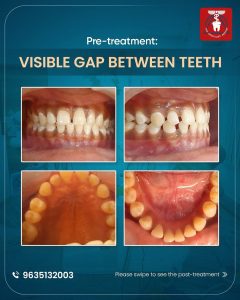
Gaps Between Teeth
Spaces can occur between two or more teeth. Some gaps may be related to tooth size, jaw structure, missing teeth, or other factors.
Crooked Teeth
Teeth may erupt at an angle or develop in an irregular position.
Orthodontic treatment can help gradually improve their alignment.
Overbite
An overbite occurs when the upper front teeth extend too far over the lower front teeth.
Depending on its severity, treatment may be recommended to improve the bite.
Underbite
An underbite occurs when the lower teeth extend in front of the upper teeth when the mouth is closed.
Therefore, professional assessment is important to determine the underlying cause and appropriate treatment.
Crossbite
A crossbite occurs when some upper teeth bite inside the lower teeth.
If left untreated, certain types of bite problems may affect tooth wear and jaw function.
Main Causes of Misaligned Teeth
There is no single cause of crooked or misaligned teeth.
Several factors may contribute, including:
- Genetics
- Jaw size and shape
- Tooth size
- Missing or extra teeth
- Certain childhood habits
- Early loss of baby teeth
- Delayed eruption of permanent teeth
- Dental trauma
- Certain jaw development problems
Furthermore, some patients may have a combination of dental and skeletal factors.
Therefore, a professional examination is necessary before deciding on braces or clear aligners.
Risk Factors for Dental Misalignment
Some factors can increase the likelihood of developing alignment problems.
For example, genetics can influence jaw development and tooth positioning. Childhood habits may also affect the development of the teeth and jaws in certain situations.
In addition, premature loss of baby teeth can sometimes affect the available space for permanent teeth.
However, not every person with these factors will develop significant orthodontic problems.
That is why individual assessment is more useful than relying on general assumptions.
Braces vs Clear Aligners: Which Is More Effective?
One of the biggest concerns when comparing braces vs clear aligners is effectiveness.
The answer depends on the type and complexity of the orthodontic problem.
Traditional braces can provide precise control over tooth movement and are commonly used for a broad range of orthodontic cases.
Clear aligners can also effectively treat many alignment and bite concerns when properly planned and monitored by a qualified dental professional.
However, clear aligners may not be appropriate for every complex case.
Therefore, the question should not simply be, “Which treatment is better?”
Instead, ask:
“Which treatment is appropriate for my specific dental condition?”
A dental or orthodontic evaluation can answer this more accurately.

Braces vs Clear Aligners: Treatment Time
Treatment duration varies from patient to patient.
It depends on factors such as:
- Severity of misalignment
- Type of bite problem
- Amount of tooth movement required
- Patient age
- Treatment plan
- Patient compliance
- Regularity of follow-up appointments
Some patients may complete treatment relatively quickly, while others may require a longer period.
Consequently, you should not choose a treatment solely because someone else completed their treatment faster.
Your dentist or orthodontist can provide a more realistic estimate after examining your teeth and bite.
Comfort and Appearance
Appearance is often one of the main reasons adults consider clear aligners.
Because clear aligners are transparent, they are generally less noticeable than traditional braces.
However, this does not mean that braces are uncomfortable for everyone. Patients may experience temporary pressure or mild soreness after adjustments as the teeth respond to treatment.
Similarly, clear aligners may feel unfamiliar when first worn.
Fortunately, patients usually adapt as treatment progresses.
Most importantly, any persistent or significant discomfort should be discussed with your dental professional.
Eating and Oral Hygiene
Eating With Braces
Patients wearing braces may need to avoid certain hard, sticky, or chewy foods.
These foods can potentially damage brackets or wires.
Additionally, food can become trapped around orthodontic components. Therefore, careful brushing and cleaning are particularly important during treatment.
Eating With Clear Aligners
Clear aligners are removable.
Therefore, patients generally remove them before eating and follow their dentist’s instructions regarding beverages.
After eating, maintaining good oral hygiene before replacing the aligners is important.
Cleaning Your Teeth
Regardless of the treatment you choose, maintaining excellent oral hygiene is essential.
During orthodontic treatment, patients should:
- Brush regularly using proper technique.
- Clean carefully around orthodontic appliances.
- Follow their dentist’s oral hygiene recommendations.
- Attend scheduled dental checkups.
- Report unusual pain, swelling, or appliance problems promptly.
As a result, good oral hygiene can help protect the teeth and gums throughout orthodontic treatment.
Benefits of Professional Orthodontic Treatment
Orthodontic treatment is not only about creating a straighter smile.
Properly planned treatment may provide several benefits.
Improved Dental Alignment
Straighter teeth can make some areas easier to clean.
Better Bite Function
Correcting certain bite problems can improve how the upper and lower teeth meet.
Improved Smile Appearance
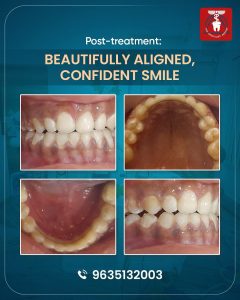
A more balanced smile can improve confidence and satisfaction with your appearance.
Better Long-Term Oral Care
When teeth are easier to access during brushing and cleaning, maintaining oral hygiene may become more manageable.
Furthermore, professional orthodontic treatment allows your dentist to monitor tooth movement and make adjustments when necessary.
Why Early Diagnosis Matters
Orthodontic problems can sometimes be identified at a young age. However, orthodontic treatment is not limited to children or teenagers.
Adults can also benefit from orthodontic assessment and treatment.
Early evaluation may help identify issues before they become more complicated.
For children and teenagers, monitoring dental and jaw development can help a dental professional determine whether orthodontic intervention may be beneficial.
Meanwhile, adults who have never had orthodontic treatment can also seek an assessment.
Therefore, it is never advisable to assume that crooked teeth are simply an unavoidable part of adulthood.
Possible Complications of Untreated Misalignment
Not every minor alignment issue requires treatment. However, significant untreated orthodontic problems may contribute to difficulties over time.
Depending on the condition, these may include:
- Difficulty cleaning certain areas
- Increased risk of plaque accumulation
- Uneven tooth wear
- Bite-related discomfort
- Difficulty chewing in certain cases
- Gum problems associated with poor cleaning
- Increased risk of dental complications in some situations
However, the potential risks vary considerably between individuals.
Consequently, a dentist should evaluate the specific condition rather than assuming that every crooked tooth requires orthodontic treatment.
Myths vs Facts
Myth: Clear aligners are always better than braces.
Fact: Clear aligners offer excellent advantages for suitable patients. However, braces may be more appropriate for certain dental conditions.
Myth: Braces are only for children.
Fact: Adults can also receive orthodontic treatment if they have healthy teeth and gums and are suitable candidates.
Myth: Clear aligners are completely invisible.
Fact: Clear aligners are transparent and discreet, but they may still be visible at close range.
Myth: Orthodontic treatment is only cosmetic.
Fact: Orthodontic treatment can improve tooth alignment and bite function in addition to improving smile appearance.
Myth: You can choose aligners without a dental examination.
Fact: Professional assessment is essential. The treatment must be planned according to your dental condition.
Myth: Treatment duration is the same for everyone.
Fact: Treatment time varies depending on the complexity of the case and how well the treatment plan is followed.
How to Choose the Right Treatment
Choosing between braces and clear aligners should be an informed decision.
Your dentist or orthodontist may consider:
1. Your Dental Condition
The type and severity of your alignment or bite problem are among the most important factors.
2. Your Lifestyle
If you frequently attend professional events or prefer discreet treatment, clear aligners may be an attractive option if you are clinically suitable.
3. Your Ability to Follow Instructions
Clear aligners require consistent wear and proper care.
Therefore, patients who may frequently forget to wear them could find fixed braces more practical.
4. Your Oral Hygiene
Both treatments require good oral hygiene. However, the cleaning routine differs.
5. Your Treatment Goals
Some patients primarily want improved tooth alignment, while others may require more extensive bite correction.
6. Your Dentist’s Recommendation
Finally, professional guidance should remain the most important part of the decision.
A treatment that works well for one patient may not be the right choice for another.
When Should You Visit a Dentist or Orthodontist?
Consider scheduling an orthodontic consultation if you notice:
- Crooked or crowded teeth
- Large gaps between teeth
- Difficulty biting or chewing
- Teeth that do not meet properly
- Frequent biting of the cheeks
- Noticeable overbite or underbite
- Difficulty cleaning certain teeth
- Changes in tooth position
- Concerns about your smile or bite
Furthermore, parents should consider professional dental evaluations for children if they notice unusual tooth eruption or significant bite concerns.
The earlier a problem is identified, the sooner appropriate treatment options can be discussed.
Long-Term Oral Health Importance
Orthodontic treatment should be viewed as part of comprehensive oral care.
Straightening teeth does not replace regular dental checkups, professional cleaning, or good daily oral hygiene.
Instead, orthodontic treatment works alongside these habits.
After orthodontic treatment, patients may also need retainers to help maintain the corrected tooth positions. The type and duration of retention depend on the individual treatment plan.
Therefore, maintaining the results requires long-term commitment.
Regular dental visits remain important even after braces or clear aligners are completed.
Conclusion
When comparing braces vs clear aligners, there is no single treatment that is best for everyone.
Traditional braces remain a reliable option for many orthodontic conditions and can provide precise control over tooth movement. On the other hand, clear aligners offer a discreet and removable alternative for many suitable patients.
However, appearance and convenience should not be the only factors you consider. Your dental condition, bite, treatment complexity, oral hygiene, lifestyle, and ability to follow treatment instructions all play an important role.
Therefore, the best way to choose between braces and clear aligners is to consult a qualified dental professional.
With proper diagnosis, personalized treatment planning, and regular follow-up, orthodontic treatment can help you achieve a healthier, more functional, and more confident smile.
Book Your Dental Consultation
Thinking about straightening your teeth but still unsure about braces vs clear aligners?
Book a consultation with a dental professional to understand your orthodontic needs and explore the treatment options suitable for you.
Do not choose an orthodontic treatment based only on advertisements, social media, or someone else’s experience.
Schedule your dental consultation today and take the first step toward a healthier, better-aligned smile.
[dental clinic near barasat, dentist near me, dental clinic near barasat, dentist near me, dental clinic near barasat, dentist near me, dental clinic near barasat, dentist near me, dental clinic near barasat, dentist near me, dental clinic near barasat, dentist near me, dental clinic near barasat, dentist near me, dental clinic near barasat, dentist near me, dental clinic near barasat, dentist near me, dental clinic near barasat, dentist near me, dental clinic near barasat, dentist near me, dental clinic near barasat, dentist near me, dental clinic near barasat, dentist near me, dental clinic near barasat, dentist near me, dental clinic near barasat, dentist near me, dental clinic near barasat, dentist near me, dental clinic near barasat, dentist near me, dental clinic near barasat, dentist near me]