Introduction
Wisdom teeth, also known as third molars, are the last set of teeth to erupt, usually appearing between the ages of 17 and 25. While some people never face issues, for many, wisdom teeth can cause discomfort, crowding, or even infections. If left untreated, wisdom tooth pain may worsen and impact overall oral health.
At The Specialist Dentist in Barasat, we help patients manage wisdom tooth pain with timely diagnosis and advanced treatments. This guide explains the causes, symptoms, treatment process, recovery tips, and when removal becomes necessary.
What Are Wisdom Teeth?
Wisdom teeth are the third and final set of molars located at the back of the mouth. Most people develop four wisdom teeth—two on the upper jaw and two on the lower jaw.
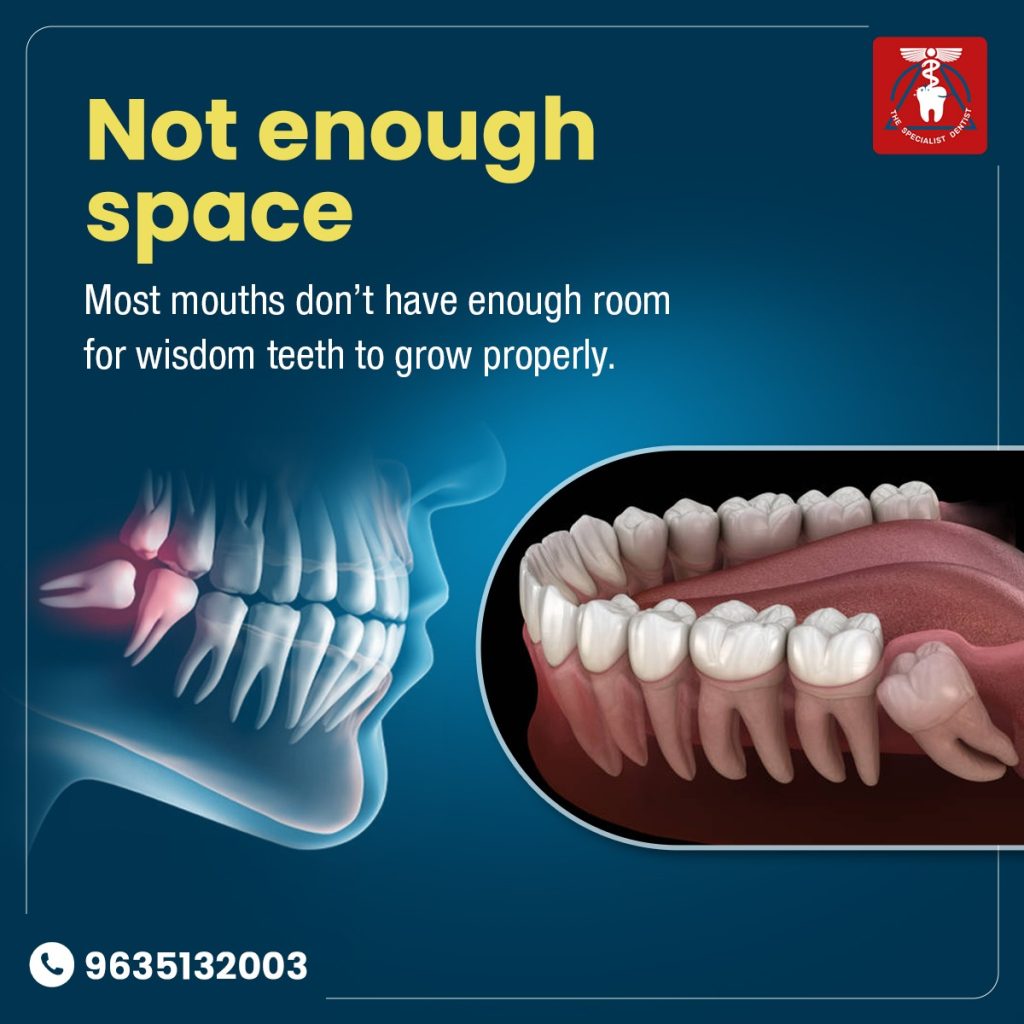
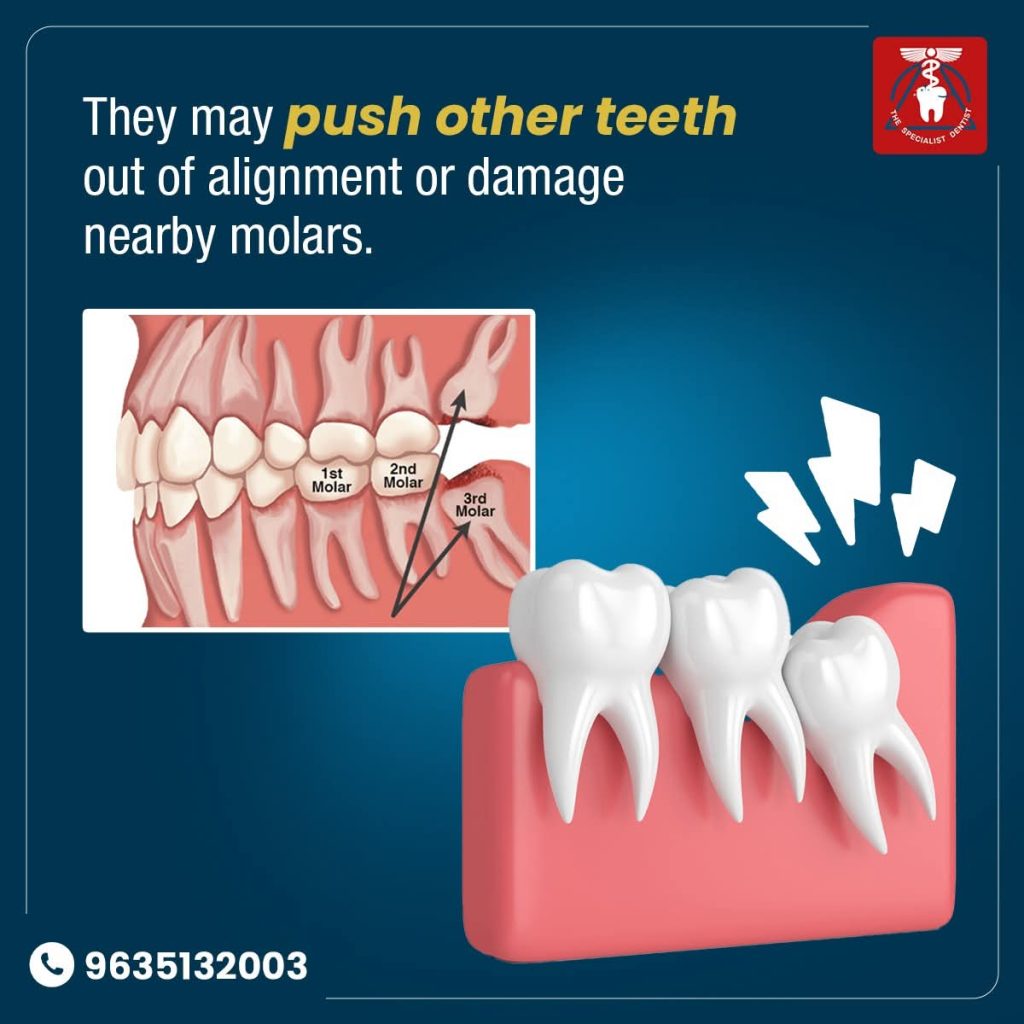
While useful for chewing in the past, today’s smaller jaws often don’t have enough room for them. As a result, wisdom teeth can become impacted (trapped under the gum or bone) or erupt at awkward angles, leading to pain and complications.
Causes of Wisdom Teeth Pain
Wisdom tooth pain usually occurs when there isn’t enough space for the tooth to grow properly. Common causes include:
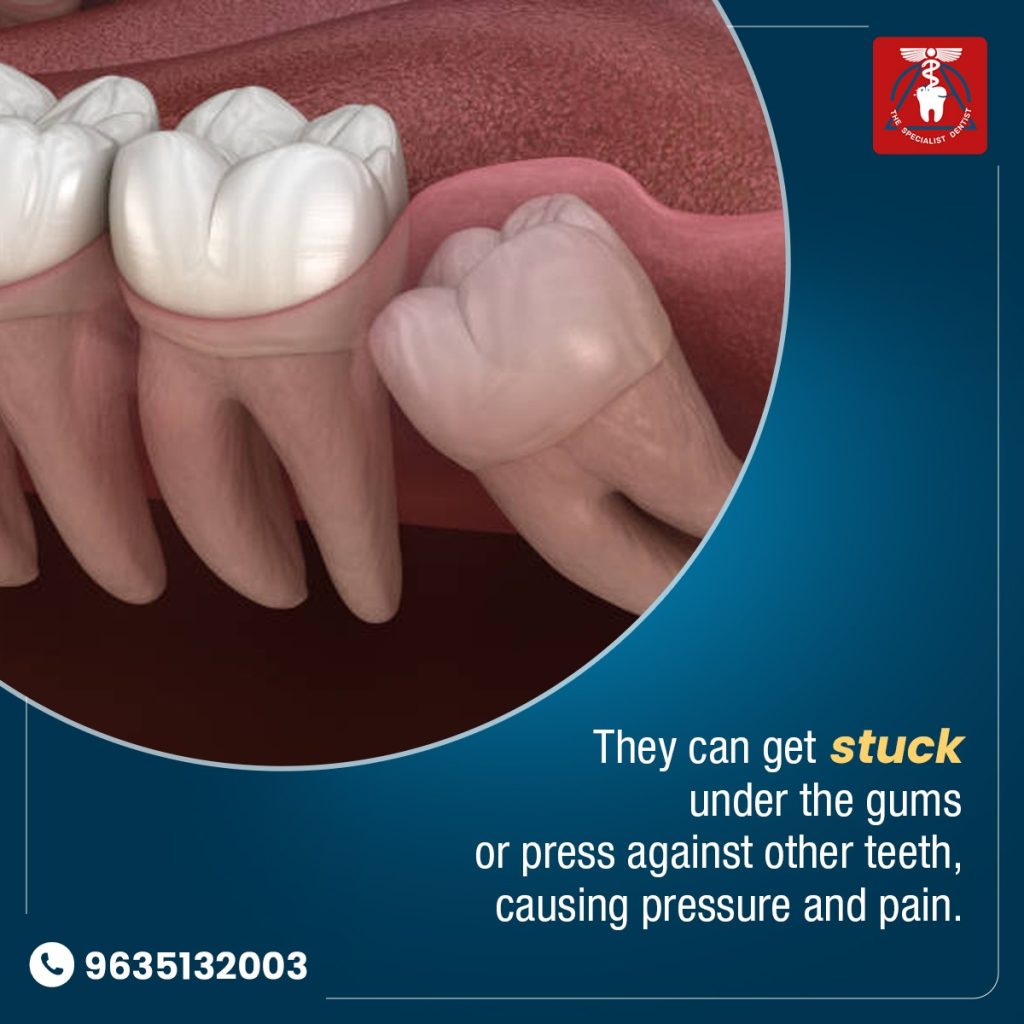
- Impaction – The tooth is stuck under the gum or bone.
- Partial Eruption – Only part of the tooth emerges, leaving gum tissue vulnerable to infection.
- Crowding – Pressure against neighboring teeth leads to shifting and pain.
- Tooth Decay – Wisdom teeth are hard to clean, making them prone to cavities.
- Gum Infection (Pericoronitis) – Inflammation around partially erupted wisdom teeth.
- Cyst Formation – Rarely, impacted teeth may cause cysts or damage nearby structures.
Symptoms of Wisdom Teeth Problems
Not every wisdom tooth causes pain, but you should stay alert to the following signs:
- Persistent pain at the back of your jaw
- Red, swollen, or bleeding gums
- Difficulty opening your mouth fully
- Earaches, headaches, or neck pain
- Bad breath or a constant bad taste
- Teeth shifting or crowding
- Jaw or cheek swelling
If you notice these symptoms, don’t wait. Schedule an appointment so your dentist can check the problem early.
When Should You Get Wisdom Teeth Removed?
You don’t always need to remove wisdom teeth. If they erupt properly and remain healthy, they can function normally. However, extraction becomes necessary when they:
- Cause severe or recurring pain
- Lead to repeated gum infections
- Stay impacted under the gum or bone
- Push against neighboring teeth and cause crowding
- Develop cavities or gum disease
- Damage jawbone or form cysts
Your dentist usually recommends an X-ray to see the exact position before deciding whether removal is the best option.
The Wisdom Tooth Extraction Procedure
At The Specialist Dentist, we use modern, patient-friendly techniques to make wisdom tooth removal safe and comfortable. Here’s what typically happens:
- Consultation and X-ray
– The dentist examines your mouth and takes an X-ray to plan treatment. - Anesthesia
– We give local anesthesia so you feel no pain during the procedure. - Tooth Removal
– The dentist makes a small incision (if needed), loosens the tooth, and removes it.
– In some cases, the dentist divides the tooth into sections for easier extraction. - Stitching and Cleaning
– The dentist cleans the area and places dissolvable stitches, if required.
Because of modern anesthesia and techniques, you stay comfortable throughout. Most procedures take only 20–45 minutes.
Recovery & Aftercare Tips
You usually recover from wisdom tooth removal within a week. However, proper aftercare speeds up healing and prevents complications.
First 24–48 Hours
- Bite gently on gauze to stop bleeding.
- Apply an ice pack on your cheek to reduce swelling.
- Stick to soft and cool foods such as yogurt, smoothies, or mashed potatoes.
Ongoing Aftercare
- Rinse with warm salt water after 24 hours.
- Brush your teeth gently, avoiding the surgical site.
- Avoid smoking, alcohol, and straws to prevent dry socket.
- Take your prescribed painkillers and antibiotics on time.
With good care, swelling reduces in 2–3 days and most people feel normal within a week.
Risks of Ignoring Wisdom Tooth Pain
Delaying treatment can lead to serious complications, including:
- Recurrent infections in gums.
- Damage to nearby teeth from crowding.
- Cysts or abscesses in the jaw.
- Chronic pain and difficulty chewing.
- Worsening gum disease around impacted teeth.
Early diagnosis and timely removal can save you from unnecessary discomfort and future dental issues.
Preventing Wisdom Tooth Complications
You cannot prevent wisdom teeth from erupting, but you can reduce risks by:
- Maintaining excellent oral hygiene
- Scheduling regular dental check-ups
- Getting timely X-rays in your late teens or early twenties
- Seeking dental advice at the first sign of discomfort
FAQs About Wisdom Teeth
1. Is wisdom tooth removal painful?
No. The procedure is done under local anesthesia, so you won’t feel pain—only mild pressure.
2. What is the best age to remove wisdom teeth?
Late teens to early twenties, before roots fully develop, is ideal.
3. Can wisdom teeth grow back after removal?
No. Once removed, they don’t regrow.
4. How long does swelling last after removal?
Usually 2–3 days, with improvement after a week.
5. Can I go to work the next day?
Many patients resume routine activities in 1–2 days, but it’s best to avoid strenuous work for 48 hours.
Why Choose The Specialist Dentist for Wisdom Tooth Care?
At The Specialist Dentist, we are committed to providing gentle, expert, and affordable wisdom tooth care. With state-of-the-art facilities and an experienced dental team, you can be assured of a smooth and comfortable experience.
📍 Location: Udayachal, KNC Road, Gupta Colony, Barasat – 700124
📞 Phone: 9635132003
🌐 Website: www.thespecialistdentist.in