Bad breath, also known as halitosis, is a condition many people feel embarrassed about. However, it affects millions worldwide. In many cases, the person experiencing it may not even realize the issue until someone points it out. Although it is not always serious, persistent bad breath can indicate underlying dental or medical problems.
At The Specialist Dentist, many patients ask why their breath smells even after brushing. Therefore, understanding the real causes becomes important. Once the cause is known, treatment becomes much easier and more effective.
What Exactly Is Bad Breath?
Bad breath occurs due to the release of foul-smelling odors from the mouth. These odors usually come from bacteria, plaque buildup, gum disease, or dry mouth. Sometimes, the cause may not be inside the mouth at all. Since the reasons vary, professional diagnosis is necessary for effective treatment.
Common Causes of Bad Breath
Bad breath can develop for several reasons. Since the cause directly impacts the solution, identifying the reason is the first step.
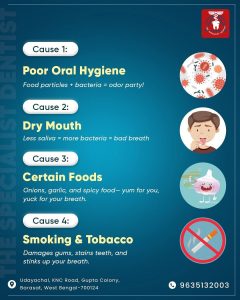
1. Poor Oral Hygiene
When teeth are not cleaned properly, food particles remain in the mouth. Over time, these particles break down and release foul smell. Additionally, poor hygiene allows plaque and tartar to build up.
2. Gum Disease
Gum disease, or periodontal disease, is a major cause of chronic bad breath. Bacteria collect below the gum line and release toxins that have a strong odor.
3. Dry Mouth
Saliva helps cleanse the mouth naturally. However, if the mouth becomes dry, bacteria grow quickly and cause bad breath. This condition is also known as xerostomia.
4. Tongue Coating
Sometimes, bacteria accumulate on the tongue’s surface. This white or yellow coating produces unpleasant odors.
5. Dental Cavities
Deep cavities can trap food particles and bacteria, creating a foul smell.
6. Smoking and Tobacco Use
Tobacco dries the mouth and releases chemicals that stick to oral tissues, making breath smell bad.
7. Medical Conditions
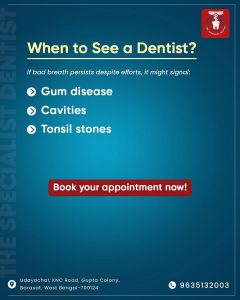
Certain medical issues like sinus infections, acid reflux, or tonsil stones can also cause bad breath.
Why Professional Diagnosis Is Important
Many people try quick fixes, but bad breath often returns because the root cause is not treated. Therefore, a professional dental evaluation becomes essential. At The Specialist Dentist, we examine your teeth, gums, tongue, and overall oral health. This helps us identify the exact cause and offer the right treatment.
Professional Dental Treatments for Bad Breath
Instead of temporary solutions, long-lasting freshness comes from proper dental treatment. Below are the most common treatments used to manage halitosis effectively.
1. Professional Dental Cleaning (Scaling and Polishing)
A simple but highly effective solution is scaling and polishing. Over time, plaque hardens into tartar, and this cannot be removed at home. Professional cleaning removes tartar from teeth and the gum line. As a result, bacteria levels decrease, and breath becomes fresher.
Benefits:
-
Removes plaque and tartar
-
Reduces bacteria buildup
-
Improves gum health
-
Instantly improves breath
2. Treatment for Gum Disease
If gum disease is causing bad breath, treating it becomes essential. Advanced gum treatments like deep cleaning (scaling and root planing) remove bacteria from deep pockets around teeth. Additionally, proper follow-up care helps restore gum health.
Signs you may need gum treatment:
-
Bleeding gums
-
Swollen gums
-
Persistent bad breath
-
Loose teeth

3. Treating Cavities and Dental Infections
Cavities, broken teeth, or infections often trap bacteria. Since these problems do not heal on their own, professional treatment is necessary. Fillings, root canals, or extractions (only when needed) help eliminate infection and stop foul odors.
4. Tongue Cleaning Guidance
Many patients do not know that cleaning the tongue is essential for fresh breath. A dentist can guide you on the correct technique and tools to use. This small step often makes a huge difference.
5. Saliva-Boosting Treatments for Dry Mouth
If your bad breath is caused by dry mouth, your dentist may recommend:
-
Hydration strategies
-
Saliva-stimulating treatments
-
Medical evaluation if needed
Dry mouth must be treated early to prevent decay and gum problems.
6. Counselling for Smoking or Tobacco Use
If tobacco is contributing to your bad breath, your dentist can help you understand its oral effects. Additionally, quitting tobacco improves oral health dramatically.
When Bad Breath Is Linked to Non-Dental Causes
Sometimes, bad breath does not come from the mouth itself. In such cases, we may refer you to a physician for further evaluation.
Possible non-dental causes include:
-
Gastric reflux
-
Sinus infections
-
Diabetes
-
Tonsil infections
A multidisciplinary approach ensures complete and long-lasting relief.
How Bad Breath Affects Health and Confidence
Bad breath does more than affect your mouth. Because it impacts social interactions, many people feel embarrassed, anxious, or avoid conversations. Furthermore, constant bad breath can signal deeper dental issues that require immediate attention.
Therefore, treating halitosis is not just about freshness; it is about confidence and overall health.