

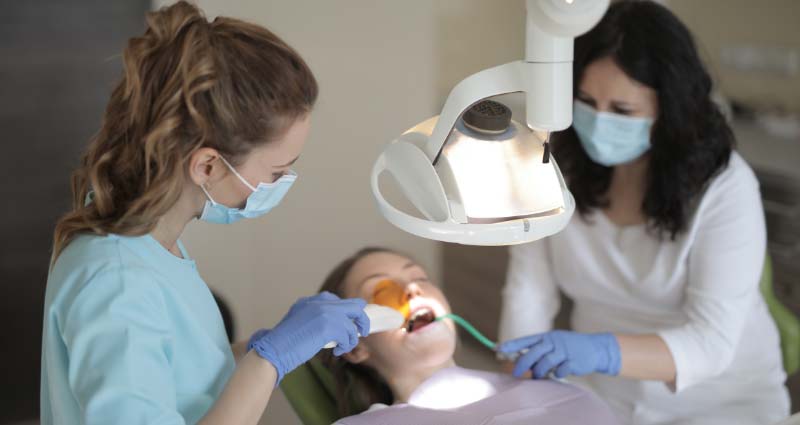
Procedures involved in the placement of pterygoid implants:
Assessment and Planning: Firstly a comprehensive evaluation of the patient’s dental and medical history, coupled with diagnostic imaging like X-rays and CT scans, is conducted to assess bone density and identify the location of the zygomatic bone. This assessment guides the decision on whether pterygoid implants are suitable.
Anesthesia: Local or general anesthesia is administered to ensure the patient’s comfort throughout the procedure.
Incisions: Small incisions are made in the gum tissue at predetermined implant sites within the cheekbone area and, if necessary, in the remaining upper jawbone.
Implant Placement: Specialized pterygoid implants, longer than traditional implants, are carefully inserted into the zygomatic bone through the incisions. These implants are securely anchored within the cheekbone, offering stability even in cases of severe bone loss.
Attachment of Prosthetics: Following implant placement, abutments are attached to them. Abutments serve as connectors that extend above the gumline and provide attachment points for dental prosthetics such as bridges or dentures.
Final Restoration: Once the abutments are in place, the final dental prosthetic—a custom-fitted bridge or denture—is fabricated and securely attached to the abutments. This restores the patient’s ability to chew and speak effectively.
What is pterygoid implant?
A pterygoid implant, also known as a tubero-pterygoid implant or pterygo-maxillary implant, is a specialized type of dental implant used in cases of severe bone loss in the upper jaw (maxilla). These implants are anchored from the maxillary tuberosity to the pterygoid bone, which is located in the skull near the base of the cheekbone.
Why pterygoid implant?
Posterior maxilla Quality and Quantity:
Quality: D4 Poor Trabecular Soft Bone
Qantity: Available bone is less. Crestal Alveolar Bone Resorption from bottom + Sinus Pneumatization from the top
Pre Implant Procedures are essential
What are the different treatment options in these situations?
Sinus Lifts: Direct/ Indirect
Bone grafting/ Bone Augmentation
Pterygoid Maxillary Buttress: The buttress, consisting of 6-7mm thick cortical bone, provides robust support due to its anatomical design and attachment to active muscles. Unlike cancellous bone, the 3rd and 2nd cortical bones undergo minimal remodeling, about 2 to 2.5% annually. This stability makes the buttress suitable for withstanding mechanical stresses efficiently.
Macro mechanical anchorage
Bone Quality: Alveolar Bone Density
Bone Quantity: Alveolar Bone Volume
Minimum inventory: Drills Handpiece Equipment
Pterygoid Anatomy
When so many advantages, Why it is scary for implantologists?
Complicated: Pterygoid anatomy
- Part of Spenoid bone
- 2 perpendicular plates
Lateral Pterygoid: attachment to masticatory muscles
Medial pterygoids:
Pterygoid fossa
Pterygoid hamulus: Medio Inferio extent of Pterygoid. Sharp point. So we need to place the implant lateral and superior to the Pterygoid hamulus.
pyramidal process of palatine bone Ptergo Palatine Fossa or Pterygo Maxillary Fossa
Target: pterygo maxillary fissure: Vital structures??
Benefits
Reduced time: 72-hour loading feasible
Minimal discomfort: Eliminates need for bone graft or augmentation
Minimally invasive: Requires less drilling, fewer surgical procedures
Cost-effective: Lower expenses compared to traditional methods
Fewer appointments needed
Frequently Asked Question
When might I need Pterygoid Implants?
If you have substantial bone loss in your upper jaw, making traditional dental implants or bone grafting challenging, Pterygoid Implants may be necessary.
How long does the recovery period last?
Initial healing takes a few days to a week, but full integration with natural bone may take months. Your dental specialist will provide a personalized recovery timeline.
How lengthy is the dental implant procedure sans bone grafts?
How much do Pterygoid Implants cost in West Bengal?
How Can We Help?